From the archive: "A Compound Eye: Thoughts on Tworkov's Flags"
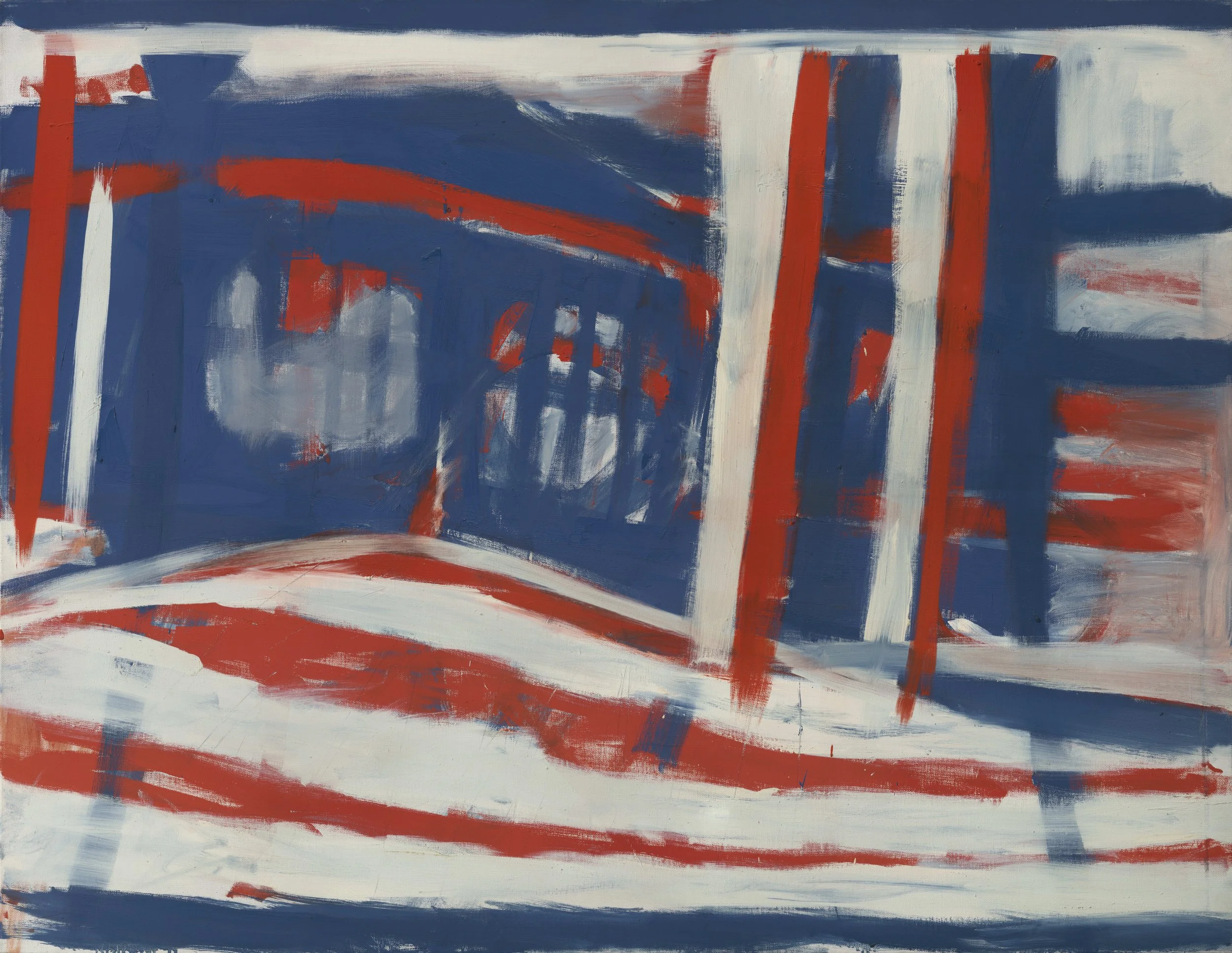
Jack Tworkov, “Oh Columbia,” 1962, oil on canvas, 62 x 80 in (157.5 x 203.2 cm) Collection of the National Gallery of Art, Washington, DC (2015.19.226)
On the occasion of American Icon: The US Flag in Art on view at The National Gallery of Art celebrating America’s 250th, we revisit a 2002 essay by Harry Cooper the current Bunny Mellon Curator of Modern Art at the National Gallery which was originally published on the occasion of the exhibition Jack Tworkov: Red, White and Blue, Mitchell-Innes & Nash and Ameringer/Howard/Yohe, New York, March 6–April 13, 2002.
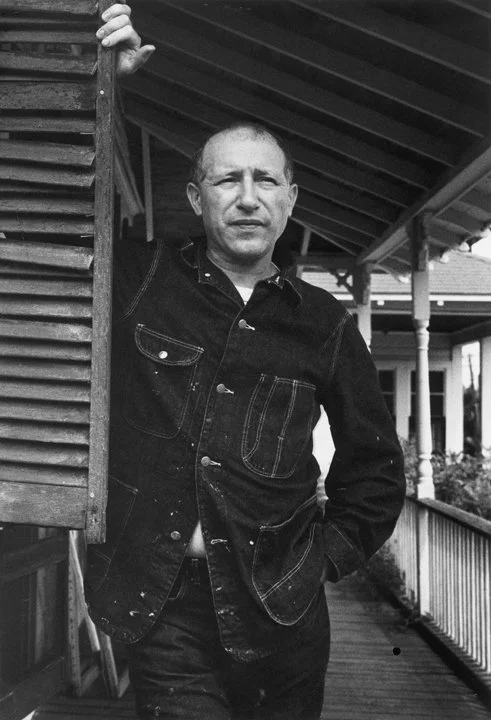
Tworkov on his porch, Provincetown, 1959. Photo: Marvin P. Lazarus
A Compound Eye: Thoughts on Tworkov’s Flags
by Harry Cooper
FIRST THINGS FIRST. It will be hard to experience this exhibition without recalling September 11th, if only because of the U.S. flag. The flag has been more present in our visual diet since that day than probably at any other time in our history. No doubt it is simply chance that several of Tworkov’s flag-inspired paintings are being shown now, within six months and several miles of the attack. But rather than dismiss this coincidence and suppress whatever ahistorical reactions it might elicit, we can turn it to our advantage, for these painting emerged from another time when the flag was very much in evidence, the late 1950s, the years of “I like Ike” and the post-war boom, the rise of television and the triumph of suburbia, the bus boycotts and the Voting Rights Act—another time when the flag was waved like a talisman at whatever might disturb the American Dream.