MINT MUSEUM ACQUIRES MAJOR WORK BY TWRKV
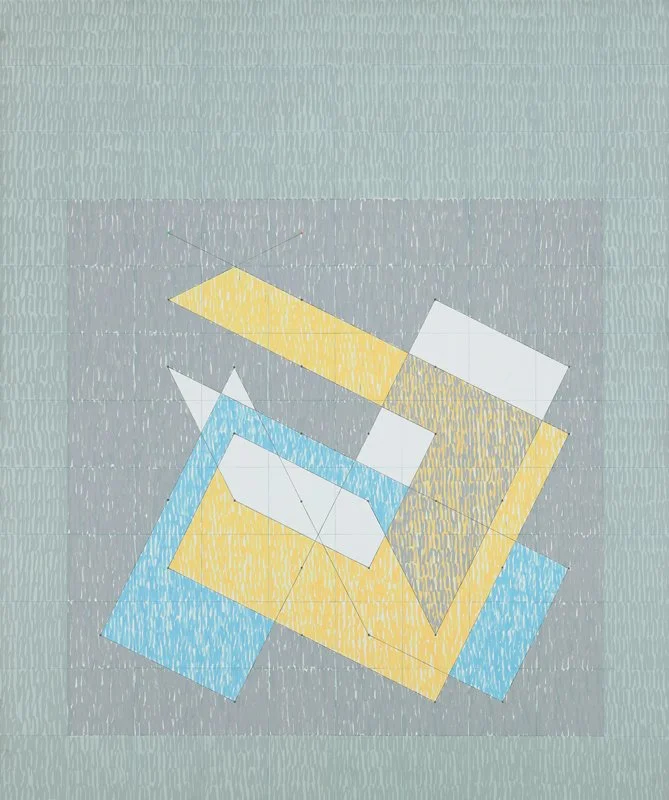
Jack Tworkov (1900-1982) “Knight Series #4 (Q3-75 #5),” 1975, oil on canvas, 90 x 75 in (228.6 x 190.5 cm) [CR 137]
The Estate of Jack Tworkov announces the recent acquisition of a major painting by Jack Tworkov by The Mint Museum of Art, Charlotte, NC. This is the first work by Tworkov to enter the collection at the Mint.
“The addition of this seminal work builds on the museum’s longstanding engagement with the artist including the Mint’s landmark 1982 retrospective exhibition devoted to Tworkov’s works on paper,” explains Todd Herman, President & CEO of the Mint.
“We are thrilled to be named among such institutions as the Cleveland Museum, The Hirshhorn Museum and Sculpture Center, and the National Gallery of Art who own work from Tworkov’s seminal ‘Knight Series.’ This acquisition further reflects the Mint’s continued commitment to deepening its representation of pivotal artists such as Jack Tworkov and brings such unique artistic dialogues to Charlotte.”
Eight large paintings belong to this important series, which were painted between 1974-77. As the title suggests, paintings from this series respond to the movement of the knight in a game of chess. Each painting traces the unique movement of a knight–zigzagging and crisscrossing its tracks across a canvas that has been divided into a grid of one hundred and twenty squares. The series is an exemplary example of Tworkov imposing a system upon his gestural mark.
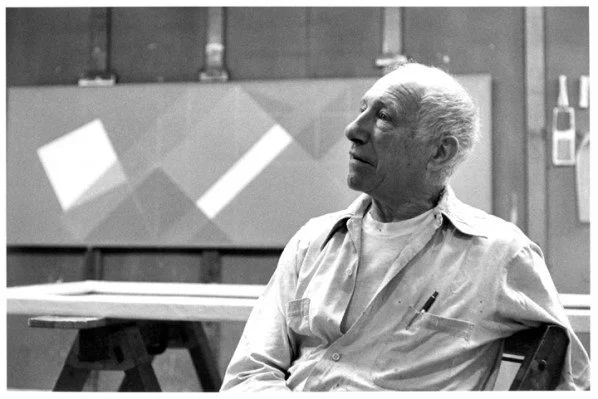
Jack Tworkov in his studio with “Progressions II (Q1-80 #2),” Provincetown, MA, 1980. Photo: Sarah Wells
Tworkov began the series in 1974 and the compositional patterns differ widely from painting to painting–just as the patterns of chess games differ widely from one another. As in pervious work, Tworkov proceeded with a combination of choice and chance.
Writing in her dissertation “The Synthesis of Choice and Chance,” Lois Fichner-Rathus dives deep to explain the series and this painting in particular writing:
In Knight Series #4 (Q3-75 #5), 1975, loosely brushed and regularly patterned dark grey vertical brushwork is superimposed on a pale grey ground. The individual squares of the board are rendered in more densely applied dark grey strokes, through which only a glimpse of the white background can be seen. Once again geometric shapes originating from the connections of the endpoints appear to exist in different lanes, two of which can be readily discerned. Yellow, blue-green, and white shapes are collared into a single plane; they lie adjacent to one another and are overlapped by a form whose interior is rendered in dark grey hatching over a yellow ground. The imagery within the board is fixed and stable; there is no interchange between or overlapping of multiple planes. The sense of movement in the works results from the relationship between background and board. Because there is little color contrast between background and board, perceptual shifts occur creating a sense of emerging and submerging.(1)
________
(1) Fichner-Rathus, Lois. “The Synthesis of Choice and Chance,” Doctoral Disertation, B.A. State University of New York at Albany, January 1981.